
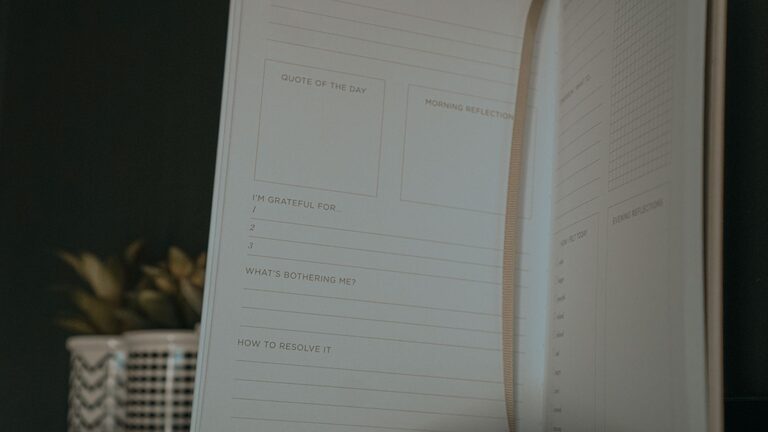
Journaling every day does not require perfect writing, a special notebook, or hours of free time. At its simplest, journaling is the practice of putting your thoughts, observations, plans, or experiences into words.
For beginners, the hardest part is often knowing what to write. A simple routine can make the process easier and more enjoyable. Whether you want to organize your thoughts, record daily events, plan your time, or explore new ideas, journaling can become a useful part of your day.
What Is Daily Journaling?
Daily journaling means writing regularly, usually once a day, in a notebook, document, or journaling app. There are no strict rules about length, style, or subject.
Some people write about:
– What happened during the day
– Tasks they want to complete
– Ideas and questions
– Personal goals
– Things they noticed
– Challenges and possible solutions
– Books, conversations, or experiences
– Plans for the next day
Your journal can be private and informal. You do not need to write for an audience, follow grammar rules, or create polished pages. The goal is to create a space where you can think on paper.
Why Start a Daily Journaling Habit?
A regular journaling practice can help you slow down and pay attention to your thoughts and experiences. Writing can also make it easier to review your days, identify patterns, and remember important details.
Journaling may help you:
– Organize a busy day
– Capture ideas before they are forgotten
– Track progress toward a goal
– Reflect on decisions and experiences
– Notice what uses your time
– Create a record of meaningful moments
– Prepare for the day ahead
The benefits often come from consistency rather than from writing a large amount. Five thoughtful minutes can be more useful than an occasional long session.
Choose a Journaling Format
Before you begin, choose a format that feels convenient. The best format is the one you are likely to use.
Paper Journal
A notebook offers a simple, distraction-free experience. You can write in a lined notebook, a blank sketchbook, or a planner with space for notes. Choose a notebook that is comfortable to carry and easy to open.
Digital Journal
A notes app, word processor, or dedicated journaling app can make entries easy to search and organize. Digital tools are useful if you already spend much of your day on a computer or phone.
Guided Journal
A guided journal includes prompts, questions, or sections for each day. This can be helpful when you are unsure how to begin or prefer a clear structure.
Bullet List Journal
A journal does not have to contain full paragraphs. Short bullet points can be used for tasks, observations, ideas, and quick reflections. This format is a good choice for busy days.
Start With a Small Goal
One of the most common beginner mistakes is setting an overly ambitious goal. You do not need to write several pages every day. Begin with a small commitment, such as:
– Writing for five minutes
– Completing three sentences
– Recording three things from the day
– Filling half a page
– Answering one prompt
A small goal is easier to repeat. Once the habit feels natural, you can write for longer when you have more time.
Try to define your goal clearly. Instead of saying, “I will journal more,” choose a specific plan such as, “I will write five lines after breakfast.”
Pick a Consistent Time
A regular time helps connect journaling with an existing part of your routine. You might write:
– In the morning with your coffee
– During a lunch break
– After finishing work or school
– Before bed
– After a walk
– While waiting for an appointment
Morning journaling can help you outline your plans and priorities. Evening journaling can help you review the day and prepare for tomorrow. There is no universally correct time, so experiment with different options.
If your schedule changes often, connect journaling to an event rather than a specific hour. For example, write after brushing your teeth at night or after sitting down at your desk in the morning.
Use Simple Prompts
Prompts provide a starting point when you do not know what to write. Keep a short list nearby so you do not have to create a topic from scratch.
Try these beginner-friendly prompts:
– What happened today?
– What is on my mind right now?
– What is one task I want to complete?
– What did I learn?
– What was interesting about today?
– What would make tomorrow easier?
– What idea do I want to remember?
– What am I looking forward to?
– What felt challenging, and what could I try next?
– What is one detail from today I might otherwise forget?
You can also use a three-part daily entry:
- **Today:** Describe one event, observation, or experience.
- **Thoughts:** Write what you noticed or wondered about it.
- **Next:** Note one action, intention, or question for tomorrow.
This structure is short enough for busy days but flexible enough to support deeper writing.
Focus on Honesty, Not Quality
Many people avoid journaling because they believe every entry should sound thoughtful or interesting. That expectation can make writing feel like work.
Your journal does not need to be impressive. It can include unfinished sentences, repeated thoughts, lists, rough ideas, and ordinary details. Write in the way that feels natural to you.
If you have nothing specific to say, begin with a simple observation:
– “Today felt busy because…”
– “The main thing I am thinking about is…”
– “I noticed…”
– “Right now, I want to…”
Starting with a plain sentence often makes the next sentence easier.
Create a Journal That Fits Your Life
Your journal should support your routine rather than add unnecessary pressure. Consider adjusting the format to match your available time.
On a busy day, write a short list. On a quiet day, write a longer entry. You can also use different sections for different purposes:
– Daily notes
– Ideas
– Goals
– Reading notes
– Travel memories
– Creative writing
– Questions to explore
Some people enjoy adding dates, locations, weather, or a brief title. These details can make older entries easier to review later.
Handle Missed Days Without Starting Over
Missing a day does not mean the habit has failed. Life becomes busy, plans change, and some days simply leave little time for writing.
When you miss a day, avoid trying to write several entries to catch up. Just begin again with the current day. You can write:
> “I missed a few days, and now I am starting again.”
That sentence is enough. A flexible habit is more sustainable than one based on perfection.
You may also create a backup version for difficult days. This could be a single sentence, three bullet points, or a quick note in your phone. A shorter version helps keep the routine familiar.
Review Your Entries
Journaling becomes more valuable when you occasionally look back at what you have written. Set aside a few minutes each week or month to review your entries.
As you read, look for:
– Repeated topics
– Ideas you want to develop
– Goals you have made progress toward
– Events you want to remember
– Tasks that keep returning
– Questions that still interest you
Reviewing can help you see how your thoughts and priorities change over time. You can also mark useful ideas with a symbol or move them into a separate list.
A Simple Seven-Day Plan
Use this plan to begin your habit:
– Day 1: Write five facts about your current day.
– Day 2: List three priorities for tomorrow.
– Day 3: Describe one interesting moment.
– Day 4: Write about an idea you want to remember.
– Day 5: Note what went well and what you would change.
– Day 6: Describe something you are looking forward to.
– Day 7: Review the week and write one observation.
After seven days, choose the prompts and format you enjoyed most.
Final Tips for Staying Consistent
Keep your journal visible and easy to reach. Leave it beside your bed, on your desk, or near another item you use every day. Set a reminder if that helps, but keep the routine simple.
Most importantly, give yourself permission to journal imperfectly. A daily journal is not a test or a performance. It is a practical place to record, reflect, plan, and explore. Start with a few minutes, use simple words, and let the habit grow naturally over time.